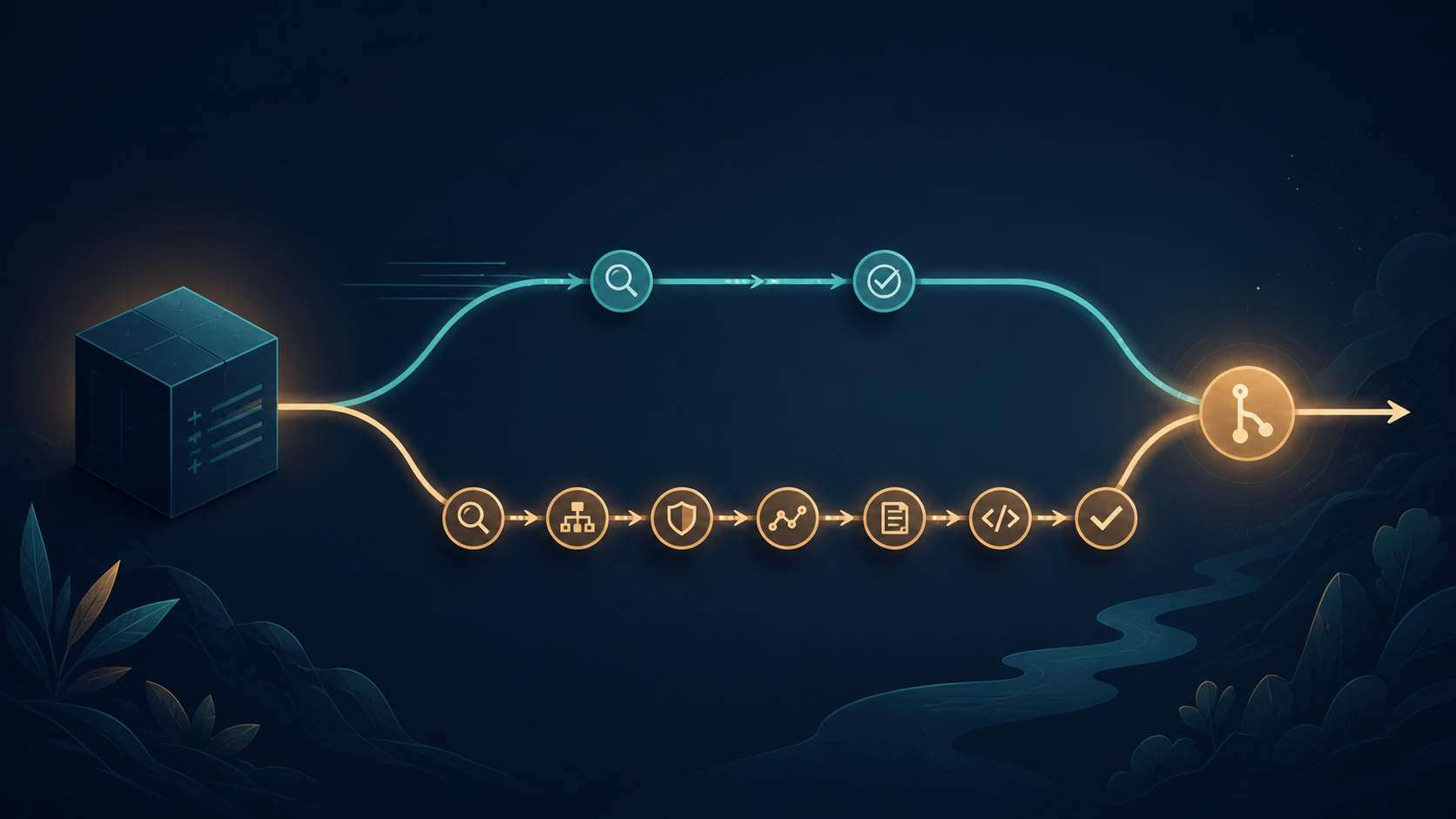
Not every pull request needs the same kind of review. A documentation fix should get quick feedback. A change that moves auth logic across three services deserves more time and more context. GitHub Copilot code review now makes that choice explicit with two generally available effort levels: Lite and Balanced. The GitHub changelog announcement says Lite and Balanced replace the preview names Low and Medium, and that existing settings carry forward automatically.
Lite versus Balanced
GitHub's Copilot code review documentation describes the levels this way:
- Lite is the default. It gives fast, targeted feedback on common bugs, security issues, and style problems.
- Balanced routes the review to a higher-reasoning model for longer analysis of complex logic, sensitive code, and cross-service changes.
Balanced uses more AI credits and GitHub Actions minutes than Lite. That does not make it the right default for every repository. It makes it a useful escalation path when the cost of missing a problem is higher than the cost of a slower, deeper review.
A simple decision rule
Use Lite when the change is easy to understand from the diff and a quick second pass is the main goal. Use Balanced when the reviewer needs to reason across boundaries or trace behavior that is not obvious from the changed lines.
Lite
- Documentation and comments
- Small bug fixes
- Local refactors
- Straightforward test changes

Balanced
- Authentication and authorization
- Billing and permissions
- Cross-service API changes
- Concurrency or data consistency
- Security-sensitive migrations
This is a policy suggestion, not a GitHub rule. Your team should adjust it for the codebase, but the basic split is useful: cheap feedback for low-risk changes, deeper analysis for changes where context matters.
How to choose it for one review
When you request a Copilot code review, choose the effort level for that run. The choice applies to the review you are requesting and does not change the repository or organization default. That makes a one-off escalation possible without changing policy for every pull request.
A good workflow is to start routine work with Lite, then request Balanced when the diff grows beyond the first reviewer's confidence. Do not use a second review as a substitute for reading the first one. Compare the findings, confirm the relevant code path, and keep human review responsible for the final decision.
Organization defaults without losing local control
Organization owners can set a default effort level for automatic reviews. Repository administrators can override that default for a specific repository. This gives platform teams a baseline without forcing a single review depth on every codebase.
Suggested rollout

1. Set Lite as the organization default.
2. Mark security-sensitive repositories for a Balanced override.
3. Let repository admins choose Balanced for high-risk pull requests.
4. Review the effort label in the pull request overview comment.
5. Revisit the default after you have enough review data.
After a review runs, GitHub labels the effort level in the pull request timeline and overview comment. Keep that label in your review habits. If a team says reviews feel slow or expensive, first check how often Balanced is being used before changing the whole policy.
Remember the two cost components
Copilot code review has two usage components. The review itself consumes AI credits based on the model interaction and tokens processed. Agentic capabilities such as full project context gathering and tool use run on GitHub Actions, so those capabilities also consume runner minutes. GitHub's usage-based billing documentation explains the AI credit side, while the code review documentation explains the Actions side.
The practical implication is that a Balanced review can cost more in two different ways. If you are investigating spend, look at both Copilot usage and the Actions minutes attached to code review. A change in runner type can also change the Actions bill even when the review policy stays the same.
Do not confuse depth with correctness
A deeper review can find more context-dependent issues, but Copilot still can make mistakes and miss problems. GitHub recommends validating its feedback and supplementing it with human review. Balanced is a way to spend more analysis on a change, not a proof that the change is safe.
A policy that works in practice
- Use Lite for the default review path.
- Require Balanced for changes that cross service or trust boundaries.
- Let repository admins override the default when the repository has a clear reason.
- Track which effort level ran instead of interpreting all Copilot comments as equivalent.
- Keep human approval and normal tests as the final gate.
Lite and Balanced are most useful when they make review effort intentional. Give every pull request a quick baseline, spend deeper analysis where the risk justifies it, and make the choice visible to the person merging the change.